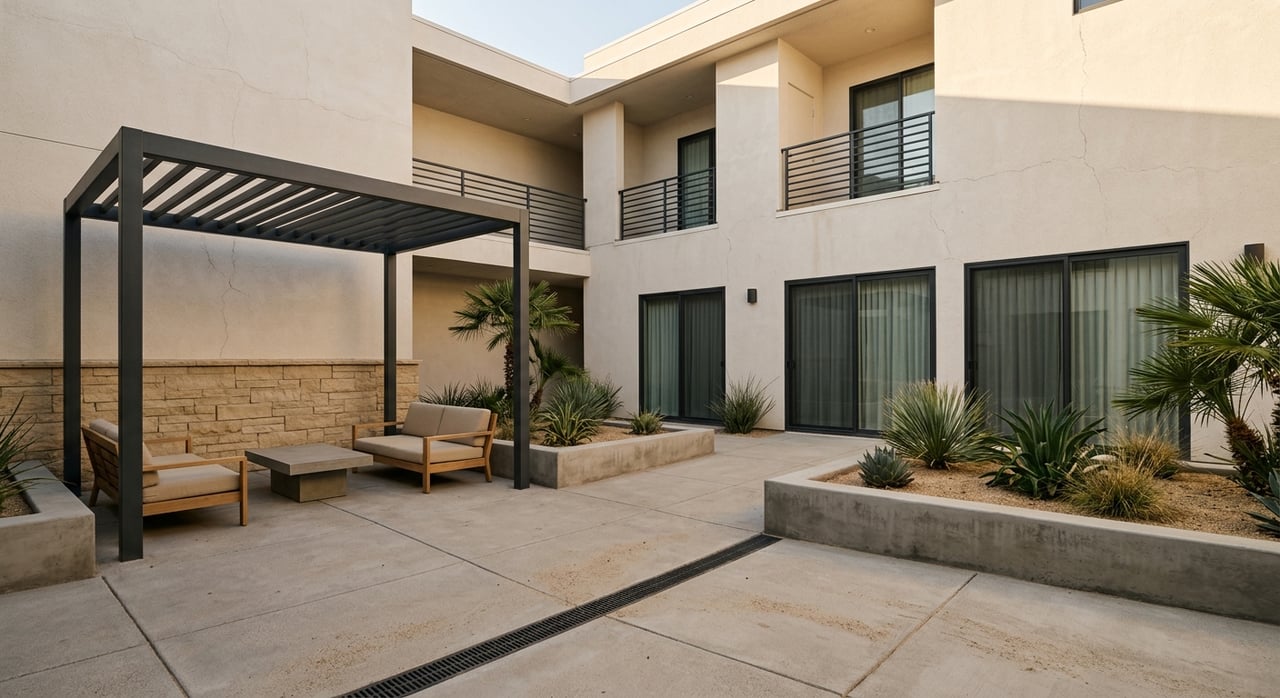
If you want a Palm Springs home you can enjoy without constant upkeep, condo living deserves a close look. Many second-home buyers want a place that feels easy to own, simple to leave, and practical to manage from a distance. This guide walks you through what condo ownership means in Palm Springs, where condo inventory tends to cluster, and what to verify before you buy. Let’s dive in.
Why Palm Springs condos appeal
Palm Springs has a large condo footprint. The city’s housing element reports 13,511 condominiums, which is nearly one-third of the city’s homes. That makes condos a meaningful part of the local housing mix for buyers who want a different ownership experience than a detached home.
For a lock-and-leave buyer, that ownership model is often the main draw. In a California common interest development, you own your unit and share rights in common areas, while the homeowners association manages and maintains those common areas. In practical terms, that can create a more seasonally manageable setup when compared with handling every exterior item on your own.
That does not mean condo ownership is maintenance-free. It means maintenance responsibilities are divided between you and the association. Your experience will depend on the community’s rules, finances, and approach to long-term repairs.
What condo ownership means
Before you focus only on price or finishes, it helps to understand how condo ownership works day to day. In Palm Springs, the details tied to an HOA can shape your monthly costs, your convenience, and even your future resale experience.
HOA dues are part of ownership
California’s Department of Real Estate advises buyers to consider homeowners association dues, assessments, and other ongoing costs when deciding what they can afford. That means your monthly payment picture may look different from a single-family purchase, even if the purchase price feels comparable.
HOA dues often support shared expenses and long-term maintenance planning. Depending on the community, that may include items tied to roofs, pavement, landscaping, or other common-area components. The exact coverage varies, so buyers should ask for specifics instead of assuming what is included.
Reserves matter more than many buyers expect
Reserve funds are meant to help cover major future replacements in common areas. California DRE guidance says reserve study materials should show current cash reserves, the remaining life of major components, estimated replacement costs, and any anticipated special assessments or association loans.
That is important because a condo’s value is connected to more than the unit itself. It is also tied to the association’s maintenance planning and financial health. A well-run HOA can support predictability, while weak reserves or deferred maintenance can create added cost and uncertainty.
Your due diligence should go beyond the listing
California law requires key HOA-related disclosures in a resale transaction. These can include governing documents, any age-restriction statement, any statement describing rental or leasing prohibitions, requested board meeting minutes, and the most recent inspection report required by law.
For you as a buyer, that means the real decision is not just whether you like the condo. It is also whether you are comfortable with the rules, repair obligations, and financial structure that come with it. Reading those documents carefully before writing an offer can save time and frustration later.
Where Palm Springs condos cluster
Palm Springs condo inventory is not spread evenly across the city. The city’s planning and housing documents point to several areas where multifamily and condo development has been concentrated.
Downtown and the central core
The city’s Central Business District and Downtown Central Core allow a mix of residential, commercial, and office uses at higher density. The Downtown Central Core can accommodate up to 70 dwelling units per acre under a specific plan.
For buyers, that pattern helps explain why you may see more condo options in and around central Palm Springs. If you want proximity to shops, dining, and a more urban layout, these areas are worth watching.
East Palm Canyon and Smoke Tree
The city identifies the Smoke Tree mixed-use area on East Palm Canyon Drive as pedestrian-oriented and suited to multifamily residential uses and infill development. That makes it one of the clearest condo-friendly patterns south of Downtown.
If walkability and lower-maintenance ownership are high on your list, this corridor may stand out. It often aligns well with buyers who want convenience without taking on the full upkeep of a detached property.
Sunrise-Vista Chino area
A city neighborhood spotlight notes that the Sunrise-Vista Chino area includes several HOA communities and saw condominium growth in the 1970s. The same source says residents valued the area for convenience, peace, quiet, and security.
That history matters because it helps explain why this part of Palm Springs remains associated with condo living. Buyers exploring established HOA communities may find this area especially relevant.
Section 14 and south-central corridors
The city’s housing element identifies Section 14 as an area with a broad mix of uses. It notes that multiple-family condos and apartments there are built at densities of 6 to 30 units per acre.
Taken together, Downtown, the East Palm Canyon and Smoke Tree area, Sunrise-Vista Chino, and Section 14 form some of the strongest condo inventory zones in Palm Springs. If you are beginning your search, these areas can provide a useful starting map.
Questions to ask before you buy
A lock-and-leave purchase works best when expectations are clear from the start. Before writing an offer, ask focused questions that help you understand costs, restrictions, and the condition of the community.
Ask what the HOA dues cover
Do not stop at the monthly number. Ask what the dues actually pay for and whether major items like roofs, pavement, exteriors, or landscaping fall under the association’s responsibilities.
Then ask how much the HOA has in reserves. You should also ask whether any special assessments are pending and what major components may need replacement soon. Those questions go directly to future ownership costs.
Verify rental rules carefully
If rental flexibility matters to you, check both city rules and HOA rules. In Palm Springs, vacation rentals and homesharing are regulated by the city, and the city says vacation rentals are limited to single-family dwelling units and prohibited in apartments.
The city also says vacation rental permits are capped by neighborhood at 20 percent of residential units, and new permittees may have no more than 26 vacation-rental contracts per year. Because the city manages these caps by organized neighborhood, you should confirm the property’s ONE-PS neighborhood and the current percentage before assuming any rental use is possible.
Separate from city rules, California law requires disclosure if governing documents prohibit rental or leasing of the unit. That is why rental questions should be handled early, not after you are emotionally committed to a property.
Review use restrictions that affect daily life
Some condo communities have additional restrictions that shape how you use the property. Ask whether there are age restrictions, pet restrictions, parking rules, or limits on guest stays.
These are not minor details for a second-home buyer. If you plan to host family, travel with pets, or leave a vehicle on site for long stretches, these rules can directly affect whether the condo fits your lifestyle.
Ask about inspections and repairs
It is also smart to ask whether the HOA has completed required inspections and whether any pending repairs have been identified. California law makes the most recent required inspection report part of the disclosure package.
That gives you another window into the association’s condition and planning. For a lock-and-leave buyer, fewer surprises usually means a better ownership experience.
Is condo living the right fit?
For many Palm Springs second-home buyers, condo living works best when your goal is predictability, shared upkeep, and access to nearby amenities. It can be a strong match if you want to enjoy the desert without managing every exterior detail yourself.
At the same time, condo ownership involves shared rules, shared finances, and less control over some property decisions. The right choice comes down to whether you value convenience and structure more than total independence.
A thoughtful condo search is about more than finding the right floor plan. It is about finding the right community, the right rules, and the right ownership model for how you actually plan to use the home.
If you are comparing Palm Springs condos and want clear guidance on neighborhoods, HOA considerations, and second-home fit, TeamMichael Hilgenberg, Keller Williams Luxury can help you evaluate your options with local insight and a practical plan.
FAQs
What makes Palm Springs condos appealing for lock-and-leave buyers?
- Palm Springs condos can appeal to lock-and-leave buyers because condo ownership in a common interest development typically includes shared common-area maintenance handled by the HOA, which can make seasonal ownership more manageable.
What should Palm Springs condo buyers review about an HOA?
- Palm Springs condo buyers should review HOA dues, reserve funds, anticipated special assessments, governing documents, rental or leasing restrictions, age restrictions, board minutes if requested, and the most recent required inspection report.
Where are condos commonly found in Palm Springs?
- Condo inventory in Palm Springs tends to cluster in and around Downtown and the central core, the East Palm Canyon and Smoke Tree area, Sunrise-Vista Chino, and Section 14 or south-central corridors.
Can you use a Palm Springs condo as a vacation rental?
- You should verify both city rules and HOA rules because Palm Springs regulates vacation rentals by neighborhood and California law requires disclosure of any HOA rental or leasing prohibitions.
What costs matter beyond the Palm Springs condo purchase price?
- Beyond the purchase price, you should factor in HOA dues, possible assessments, reserve strength, and the association’s long-term repair planning because these can affect your total cost of ownership.