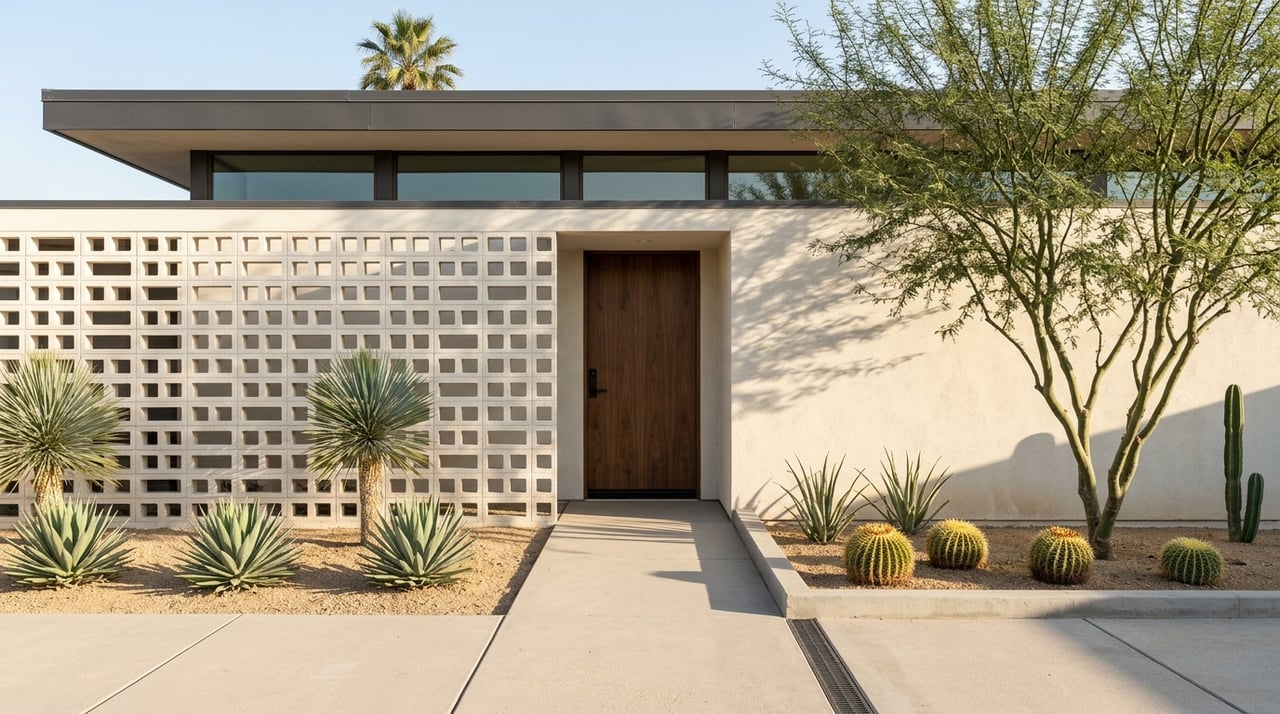
Are you drawn to Palm Springs homes that somehow feel both timeless and perfectly suited to desert living? If you have ever looked at a classic property here and wondered why it feels so open, calm, and connected to the landscape, the answer is usually in the details. Once you know what to look for, you can better understand what gives these homes their lasting appeal and why those features still matter to buyers today. Let’s dive in.
Why Palm Springs Design Stands Out
Palm Springs is widely recognized for its concentration of mid-20th-century Modern architecture, especially the Mid-Century Modern homes that helped shape the city’s identity after World War II. City planning materials also note that these clean-lined designs fit the desert environment, which helps explain why the style still feels so natural here.
This was not design for design’s sake. Classic Palm Springs homes were created to respond to sun, climate, views, and outdoor living. That is why the best-known architectural details are not just beautiful. They are practical, too.
Post-and-Beam Shapes the Floor Plan
One of the clearest details in classic Palm Springs homes is post-and-beam construction. Local historic reports describe it as a defining feature of postwar Palm Springs modernism and a major part of the Palm Springs School of Architecture.
This building method allowed for non-bearing interior walls, which opened the door to more flexible room layouts and larger open living spaces. In simple terms, it helped create the airy, flowing floor plans that many buyers still want today.
Why it matters to you
If you are touring a classic home, post-and-beam design often shows up in the sense of openness you feel right away. Rooms may connect more naturally, sightlines tend to be longer, and the home often feels less boxed in than more traditional layouts.
Clerestory Windows Bring in Light
Clerestory windows are another signature Palm Springs detail. These high windows sit near the roofline and are commonly used to bring in daylight while maintaining privacy.
In desert homes, that balance matters. You get brightness without relying only on large street-facing windows, and the interior often feels lighter and more visually open because of it.
What to look for
When you walk through a classic Palm Springs home, look up. Clerestory windows are often placed above beams, where they add light and reinforce the connection between indoor and outdoor space.
Walls of Glass Create Indoor-Outdoor Living
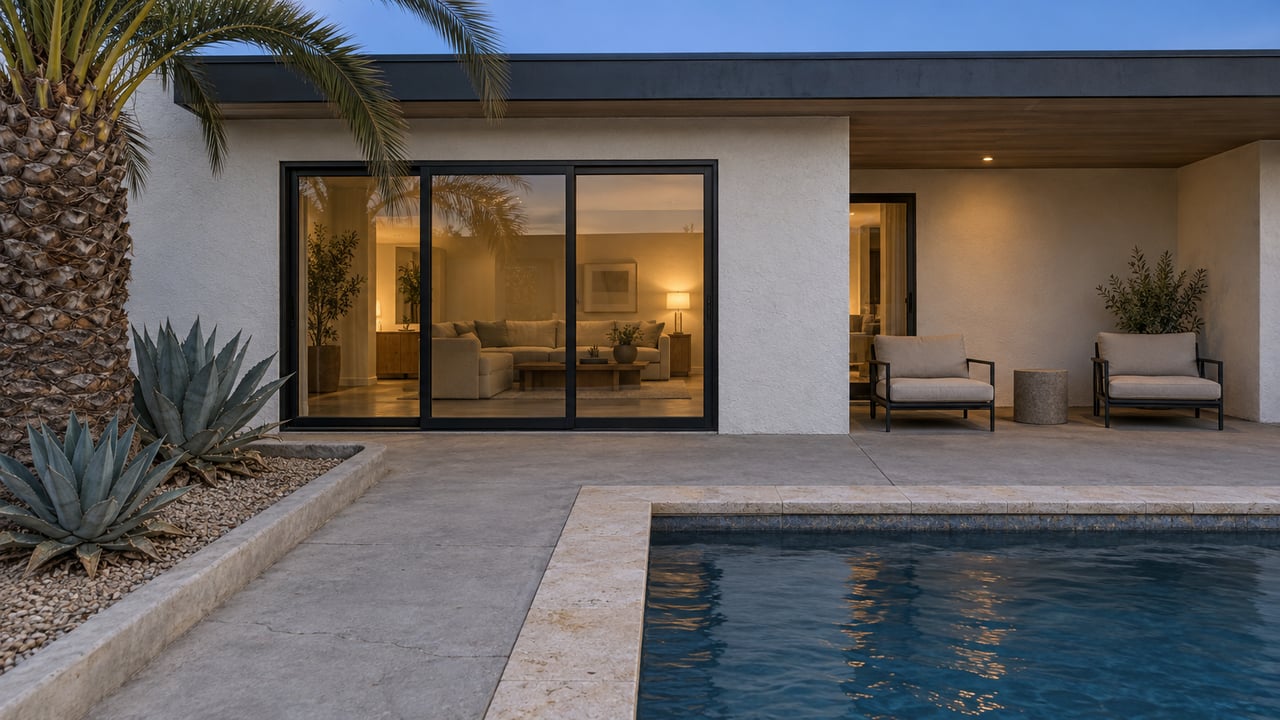
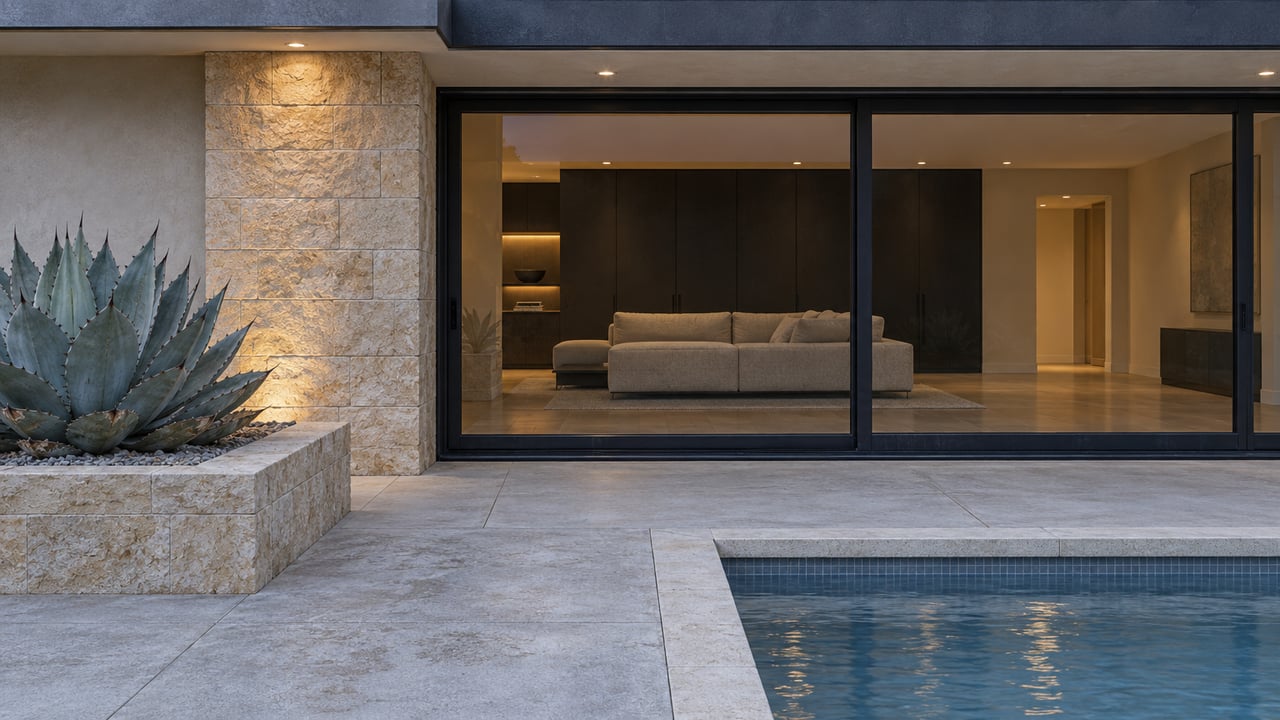
Few details define classic Palm Springs homes more than walls of glass and sliding doors. Local historic materials identify fixed glass panels, sliding glass doors, and broad glazed openings as character-defining features of these properties.
This is one reason Palm Springs architecture feels so lifestyle-driven. The home is often designed to open directly to patios, pools, mountain views, and shaded outdoor areas just beyond the glass.
Why glass works in the desert
Large glass expanses were often paired with deep roof overhangs. Those overhangs helped shield the glass from harsh sun while supporting the easy indoor-outdoor flow that remains one of the area’s most sought-after design qualities.
Breeze Blocks Add Pattern and Function
Breeze blocks, also called screen blocks, are among the most recognizable Palm Springs design details. These patterned concrete screens became common in hot desert climates because they could encourage airflow while blocking direct sun.
They also add a strong visual rhythm to a home’s exterior. In Palm Springs, many different block patterns have been documented, which makes them both a practical feature and a piece of local design history.
Why buyers notice them
Breeze blocks stand out in listing photos because they create texture, shadow, and privacy without making a home feel closed off. They are one of those details that can make a property feel distinctly Palm Springs at first glance.
Low Horizontal Lines Define the Look
Classic Palm Springs homes often read as long, low, and grounded in the landscape. Historic reports describe low horizontal massing, open carports, and projecting walls that help define outdoor spaces.
That low-slung profile is a major reason these homes feel relaxed and visually calm. Instead of fighting the desert setting, the architecture tends to stretch outward and sit comfortably within it.
Outdoor rooms matter, too
In many classic homes, patios, pool decks, and covered spaces are not afterthoughts. They are part of the plan from the start, shaped by walls, rooflines, and transitions that make outdoor living feel like a natural extension of the home.
Desert Materials Support the Architecture
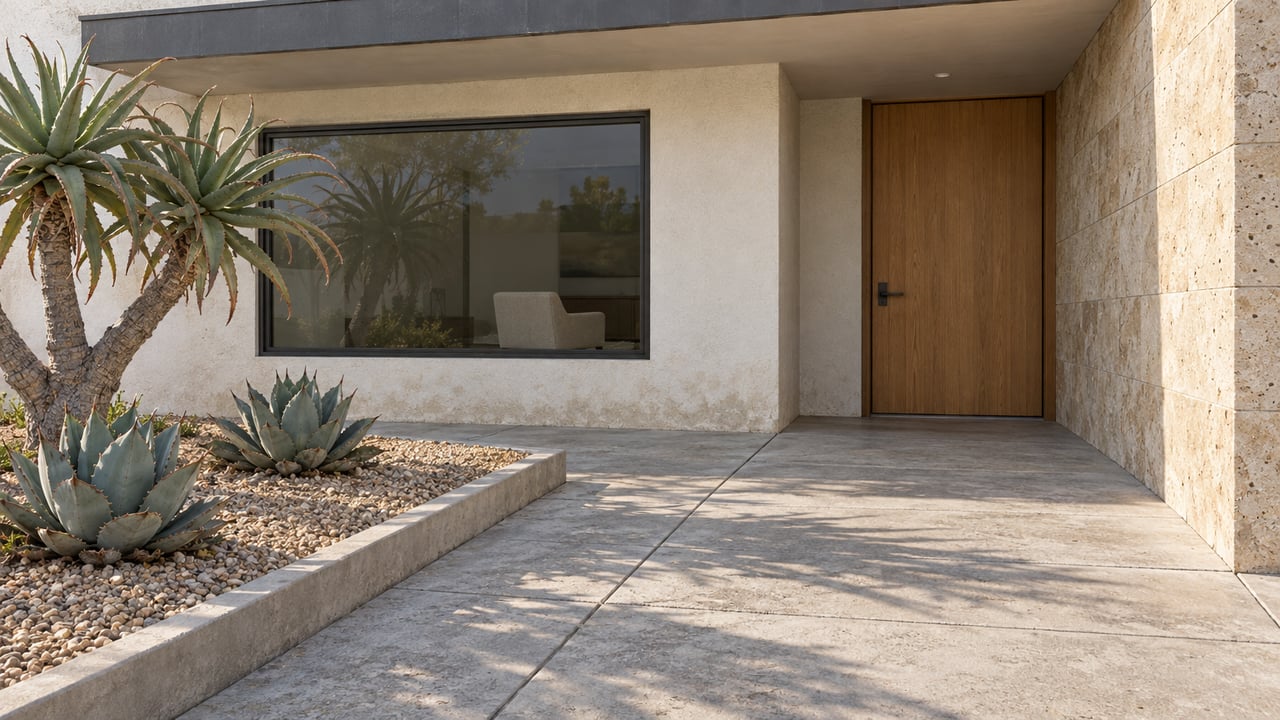
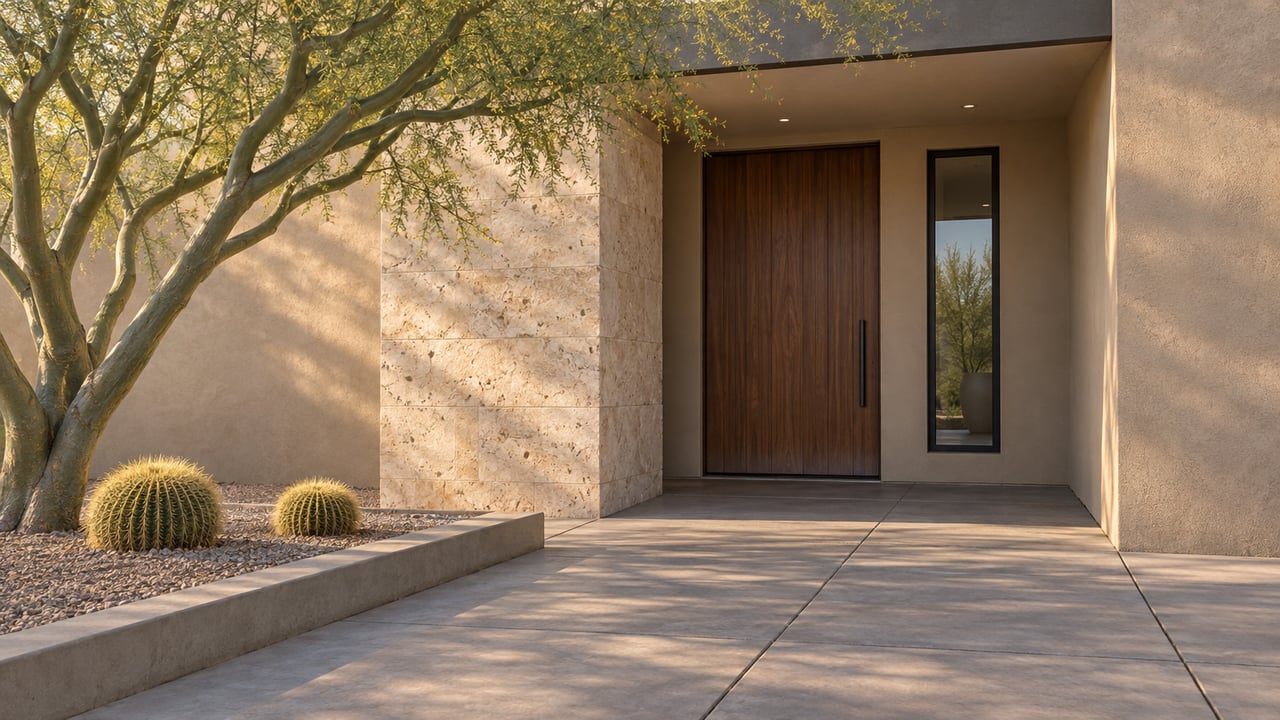
Classic Palm Springs design often relies on simple, durable materials rather than heavy ornament. City design policies encourage materials suited to the desert climate, including stone, stucco, plaster, and metal.
Historic reports also identify materials like concrete masonry units and, in some homes, T1-11 plywood. One city report notes that wood was not ideal in the harsh desert climate because it could warp and buckle, while concrete block was valued in part for durability and ease of maintenance.
What that means for buyers
When you see a home with clean finishes and a restrained material palette, that simplicity is often intentional. In Palm Springs, understated materials can help the architecture, light, and landscape do the talking.
Landscape Is Part of the Design
In classic Palm Springs homes, the yard is not separate from the architecture. Historic reports highlight native plant materials, mature palms, Aleppo pines, granite boulders, desert landscaping, and pools as part of the overall visual vocabulary.
City planning policies also emphasize preserving view corridors and integrating development with the natural setting. That helps explain why the most memorable homes often feel like complete compositions rather than just structures on a lot.
The full picture
A classic Palm Springs property often works best when the house, shade structures, hardscape, and planting plan all support one another. That is part of what gives these homes their sense of balance and place.
Why These Details Still Matter Today
For today’s buyers, these features are about more than style. Beams, clerestories, glass walls, screen blocks, and integrated landscaping all support the way a home lives in the desert.
They can also matter from a preservation standpoint. Palm Springs treats many of these homes as heritage assets, and the city distinguishes between designated historic resources, potentially eligible resources, and structures within historic districts.
Preservation Can Affect Ownership
The city’s Historic Site Preservation Board helps identify and recommend historic sites and districts. Palm Springs also references the Mills Act as a preservation tool that may provide potential property tax relief in exchange for a preservation contract.
If you are considering a classic home, it is helpful to understand that the same details you love may also be central to how the property is evaluated and preserved locally. That does not lessen their appeal. In many cases, it adds another layer of long-term value and stewardship.
What to Notice When Touring Homes
If you are shopping for a classic Palm Springs property, keep an eye out for the details that define both appearance and function:
- Post-and-beam construction
- Clerestory windows near the roofline
- Large glass walls and sliding doors
- Deep overhangs for shade
- Breeze blocks or screen blocks
- Low horizontal rooflines and massing
- Open carports and defined outdoor rooms
- Desert-appropriate materials like stucco, stone, plaster, metal, and concrete block
- Landscaping that feels integrated with the architecture
When several of these details come together, you are usually seeing more than a design trend. You are seeing the core language of classic Palm Springs architecture.
Whether you are buying a second home, evaluating a design-forward property, or preparing to sell an architecturally notable residence, understanding these features can help you see a home more clearly. In Palm Springs, the details are not minor. They are often the reason a property feels so iconic in the first place.
If you are exploring classic homes in Palm Springs or thinking about how architectural features may influence value and buyer interest, TeamMichael Hilgenberg, Keller Williams Luxury can help you navigate the market with local insight and personalized service.
FAQs
What design style defines many classic Palm Springs homes?
- Many classic Palm Springs homes are associated with Mid-Century Modern and desert modernist design, shaped by postwar architecture and a strong response to the desert environment.
What is post-and-beam construction in Palm Springs homes?
- Post-and-beam construction is a structural system that helped create open floor plans, flexible room layouts, and the airy feel that defines many classic Palm Springs properties.
Why do classic Palm Springs homes have clerestory windows?
- Clerestory windows bring in natural light from high on the wall near the roofline while helping maintain privacy and supporting an open interior feel.
Why are breeze blocks common in Palm Springs architecture?
- Breeze blocks are patterned concrete screens used to encourage airflow, block sun, add privacy, and create the geometric look that is common in classic desert design.
Why do Palm Springs homes use so much glass?
- Large glass walls and sliding doors help connect interior living areas to patios, pools, and views, which supports the indoor-outdoor lifestyle that is central to Palm Springs design.
Can historic status affect a classic Palm Springs home?
- Yes. Palm Springs identifies designated historic resources, potentially eligible resources, and properties within historic districts, and preservation considerations may affect how certain features are maintained.