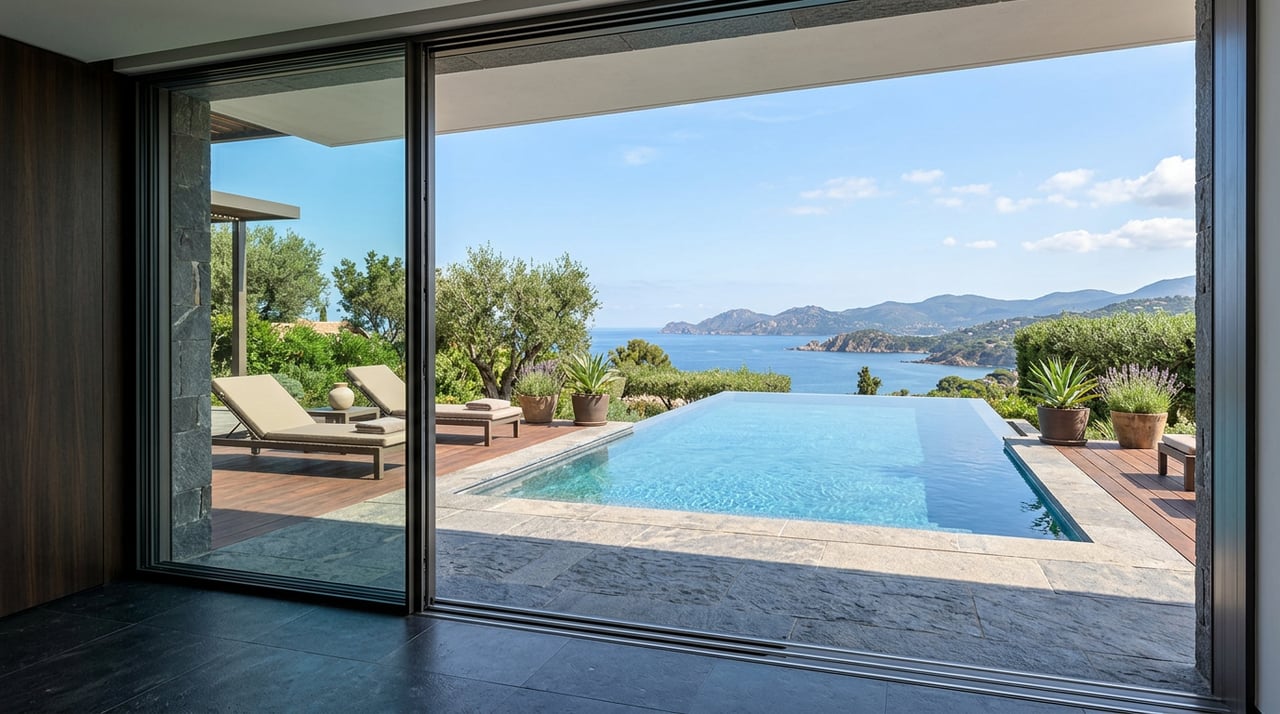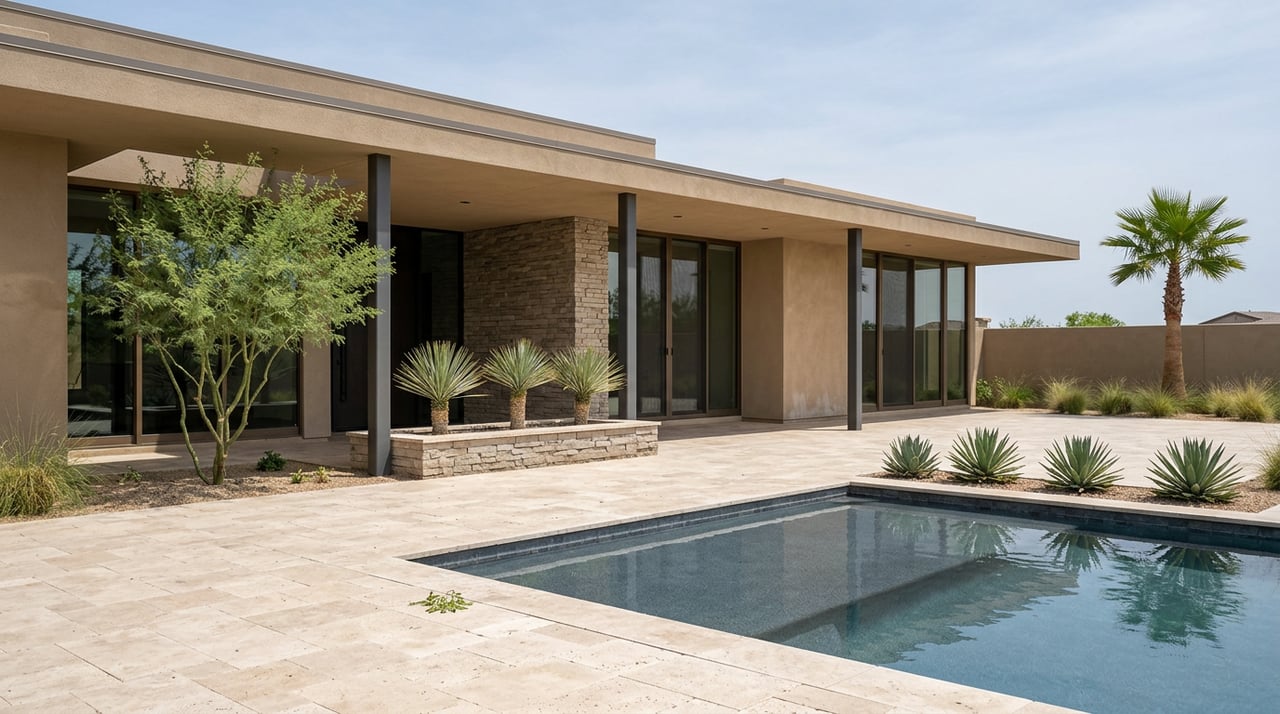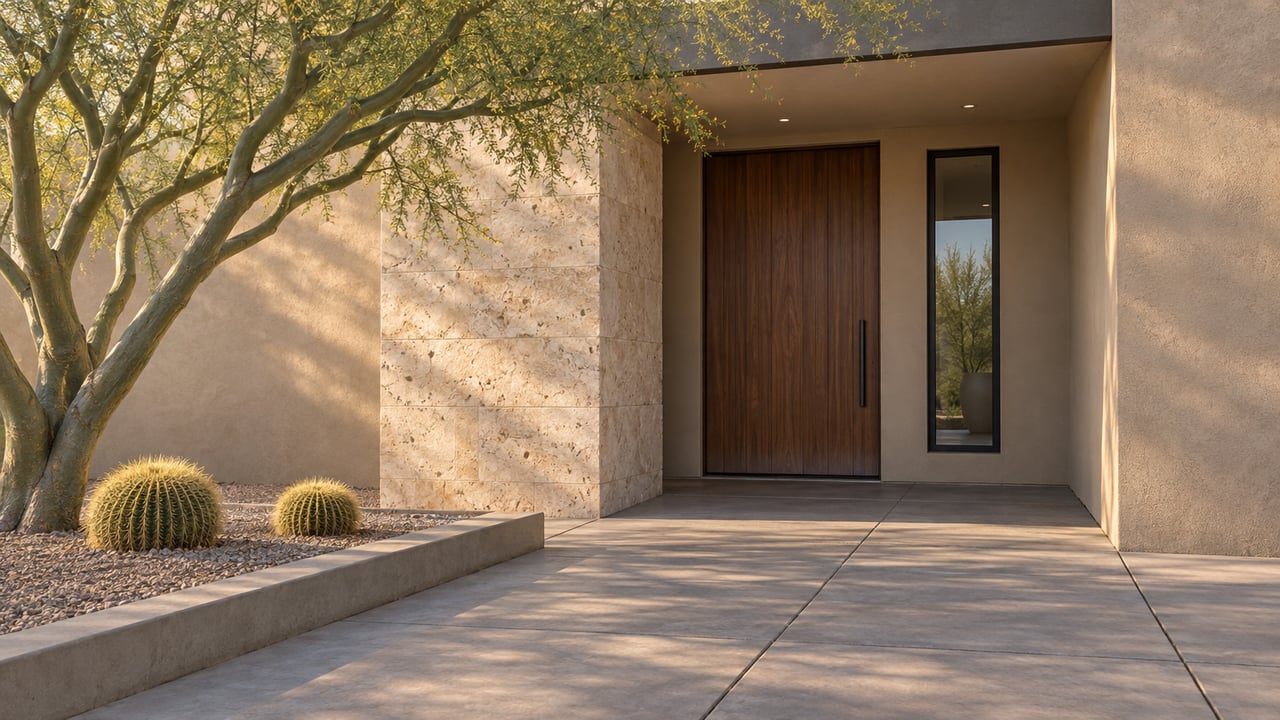
Pull up two Rancho Mirage listings this month and you'll likely see something odd. One shows a monthly HOA figure north of $1,800. The other shows something closer to $700. On paper, the second home looks like the better deal by more than a thousand dollars a month. It might not be. Depending on which community each home sits in, that lower number can be the smaller slice of a bigger bill, while the higher one is already the whole story.
Rancho Mirage runs on country club economics more than most cities in the Coachella Valley, and the confusion starts with a basic mismatch: the HOA fee on a listing sheet and the cost of belonging to the club next door are not always the same charge, and they are almost never disclosed the same way twice. Listings across the city carried a median list price of $920,000 as of early September 2026, with homes averaging 78 days on market, according to current portal data. That gap between list price and time on market matters here, because it means most buyers actually have room to ask for the documents before they compete for a home. The problem is knowing which documents to ask for, since the fee structure changes from gate to gate.
Two homes, two very different deals, one similar-looking number
Take The Springs Country Club. Its 2025-26 assessment schedule runs $1,826 a month, broken into a $1,340 base assessment, $67 for cable, and a $419 social club assessment. That base line funds exterior painting, roof maintenance, 46 common pools and spas, landscaping, 24-hour gated security, home alarm monitoring, pest control, structural insurance, and reserves. The $419 piece buys a community membership with dining, social events, racquet sports, and fitness. Golf is optional and billed on its own. In other words, the number on the listing sheet already includes the lifestyle most buyers are picturing when they say they want a country club home.
Now look at Sunrise Country Club a few miles away. Its 2025 HOA dues range from $690.46 to $815.45 depending on floor plan, covering cable and internet, trash, exterior and roof care, landscaping, and quarterly pest control. That number looks like a bargain next to The Springs. But at Sunrise, home purchase comes bundled with an equity club membership with no separate initiation fee, while golf dues are billed as a separate, recurring charge on top of the HOA. Sunrise and its club are governed by separate elected boards, a structural detail that tells you the HOA and the club are related but not identical entities. So the real comparison isn't $1,826 versus $700. It's $1,826 all-in versus $700 plus whatever Sunrise's separate golf dues add once you actually want to play.
When the club isn't for sale at any price
A third model removes the guesswork by removing the option. Thunderbird Country Club, one of Rancho Mirage's original postwar anchors alongside Tamarisk, states plainly that membership is by invitation only. Buying the house does not buy the membership, and no HOA line item substitutes for it. If club access is part of why you're looking at a home near Thunderbird, that access is not something your down payment guarantees. It's worth confirming in writing, from the club itself, before you assume a home's location implies a membership path.
The fee-simple version, without a club at all
Rancho Mirage Country Club, built in 1984 with 266 homes, runs a different structure entirely. It sits on fee-simple land, not leased ground, with a current HOA of $950 a month that covers exterior and roof maintenance, cable, internet, landscaping, four community pools and spas, a bocce court, and a 10-hole golf course available to homeowners at a low additional annual rate. The main course closed at some point and current listings note plans to reopen it, with the 10 exterior holes playable now. There's no separate club corporation billing dues on its own schedule here. The HOA number is close to the full number, golf included, which is a very different proposition from a community where the HOA and the club are two organizations sending two bills.
The newest entrant unbundles everything
Disney's Cotino, the Storyliving by Disney community now under construction in Rancho Mirage, takes the opposite approach from Rancho Mirage Country Club. Its HOA dues run $400 to $600 or more a month, genuinely modest by the city's country club standards. But the community's Artisan Club, which opened October 24, 2025, is entirely voluntary and entirely separate. Joining costs a $20,000 initiation fee plus $11,000 to $19,000 in annual dues, on top of the HOA. Membership unlocks two signature dining venues, wellness studios, social spaces overlooking Cotino Bay, the Cotino Bay beach, and the Parr House. None of that is priced into the HOA line at all.
Here's the comparison in one place.
| Community | Monthly HOA/Assessment | Club Structure | What's Billed Separately |
|---|---|---|---|
| The Springs | $1,826/mo (2025-26), includes $419 social club piece | Community/social membership bundled in | Golf only |
| Sunrise Country Club | $690.46–$815.45/mo (2025), by floor plan | Equity membership automatic, no initiation fee | Golf dues, billed on their own schedule |
| Rancho Mirage Country Club | $950/mo | No separate membership required | Low annual rate for 10-hole course access |
| Thunderbird Country Club | Not publicly listed | Invitation-only, not tied to purchase | Access itself, not guaranteed by ownership |
| Cotino (Disney) | $400–$600+/mo | Artisan Club fully voluntary, unbundled | $20,000 initiation + $11,000–$19,000/year |
What the sticker price doesn't show
Run the Cotino numbers out. Spread a $20,000 initiation fee over ten years and it adds roughly $167 a month. Add annual dues of $11,000 to $19,000 and that's another $917 to $1,583 a month. Stack that on top of the $400 to $600 HOA and a Cotino homeowner who joins the Artisan Club is looking at a total monthly number that can land close to, or above, The Springs' fully bundled $1,826. The HOA figure that looked like the affordable option at first glance was never the full picture. It was the base fee for a structure that charges separately for everything the older, bundled communities fold in.
This has a practical consequence at the lending desk, too. If a club offers a payment plan for its initiation fee rather than requiring it in cash at closing, the monthly payment on that plan gets counted as debt during mortgage underwriting, the same way a car payment or student loan would. A buyer comparing two homes on HOA fee alone might qualify comfortably for one and find their debt-to-income ratio tighter than expected on the other, purely because of how a club chooses to bill its members.
None of this means one structure beats another. A buyer who wants golf as a daily habit may get more real value from Sunrise's bundled equity access than from paying Cotino's unbundled rate for amenities they'll use occasionally. A buyer who wants social life without golf may find The Springs' all-in number simpler to budget against than chasing separate bills from two organizations. The point is that the comparison has to happen at the level of total structure, not at the level of the number a listing sheet happens to print first.
Before writing an offer on any Rancho Mirage country club home, it's worth asking the listing agent for three specific things: whether club membership is mandatory or optional for owners, whether that membership is already included in the HOA assessment or billed by a separate entity, and whether any initiation fee has a financing option that would show up as debt to a lender. With homes averaging 78 days on market as of early September 2026, there's usually enough time to get real answers before a decision has to be made.
Rancho Mirage's country club landscape has more variation than a single median price or a single HOA line will ever show. If you're comparing communities and want the actual carrying cost, not just the number a portal displays, Michael Hilgenberg can walk through the HOA disclosures and club terms for the specific communities on your list before you write an offer.