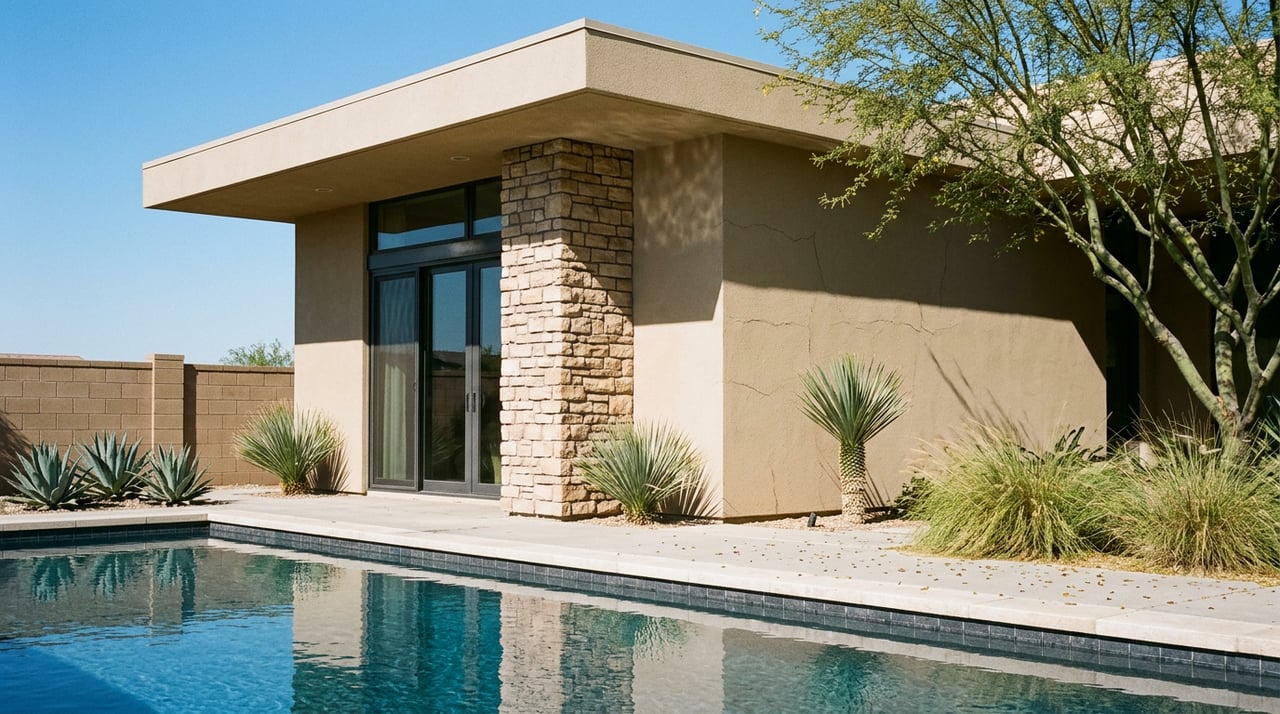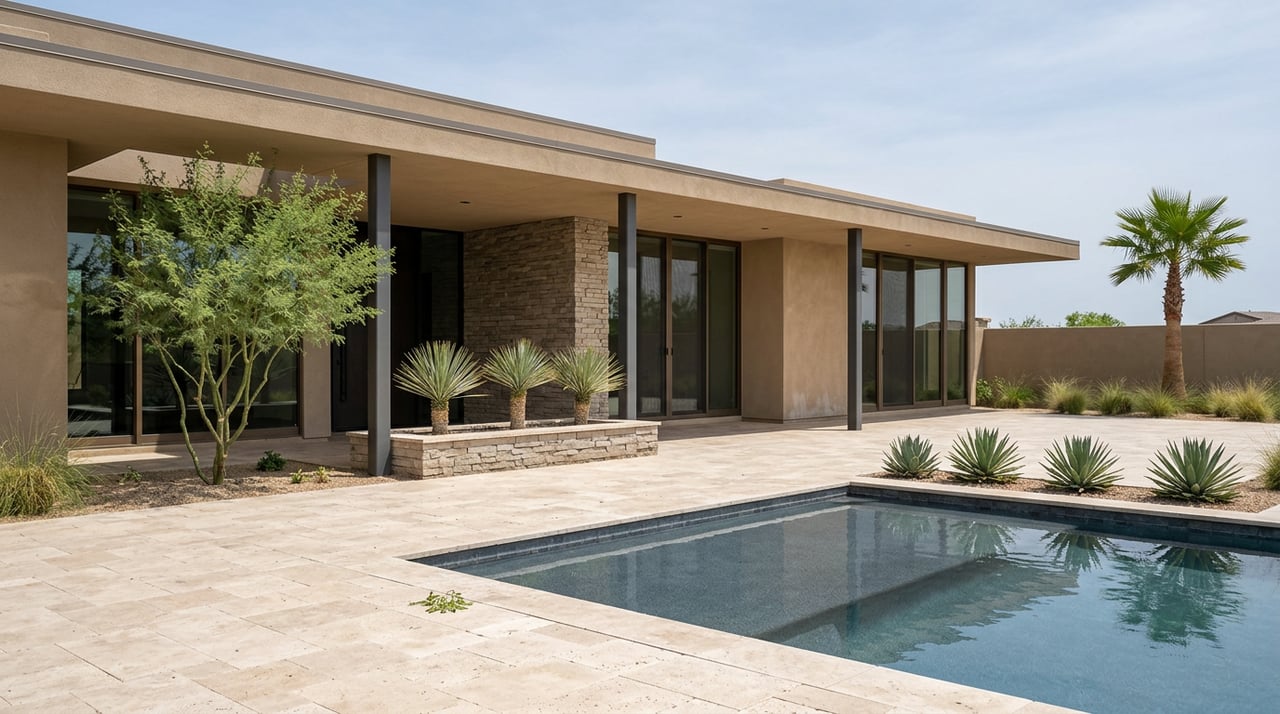
Two homes, same price range, same square footage, ten minutes apart. One sits in a Palm Desert hillside enclave. The other sits in Palm Springs, just off a street lined with palms and midcentury rooflines. A buyer comparing them on a spreadsheet sees near-identical numbers: comparable list prices, similar HOA dues, comparable projected nightly rates from a rental calculator. What the spreadsheet does not show is that one of those homes is about to lose its legal right to earn rental income entirely, and the other is subject to a neighborhood-by-neighborhood cap that already has waitlists in some pockets and open doors in others.
That is the part of Coachella Valley real estate that rarely makes it into a listing description. The Valley is not one rental market. It is a patchwork of city ordinances, zoning districts, and HOA covenants, and the lines between them matter more than the city limits themselves.
What actually expires on December 31, 2026
Start with the clearest deadline on the calendar. Palm Desert's short-term rental code draws a hard distinction between properties inside the Hillside Planned Residential (HPR) zone and everywhere else. Under the city's own municipal code, existing off-site short-term rental permits in the HPR zone can still be renewed if the owner otherwise qualifies, but every one of those permits terminates and the use must permanently cease by December 31, 2026. No new off-site permits are being issued in that zone at all. Once an existing permit lapses or is revoked, a new one will not take its place.
That is not a proposal working its way through a council agenda. It is already written into Palm Desert's municipal code, and the city's own short-term rental page confirms the same cutoff. If you are looking at a Palm Desert property in the HPR zone that currently operates as an off-site vacation rental, the income you see in a host's historical earnings is a countdown, not a baseline. Anyone underwriting that purchase on the assumption that current rental revenue continues past this year is underwriting a different property than the one actually for sale.
On-site short-term rentals in Palm Desert's Planned Residential zones are a separate story and remain permitted unless a functioning HOA's CC&Rs say otherwise, which is its own layer of due diligence worth doing before you write an offer.
The map that matters isn't the city limit
Palm Springs tells a different version of the same lesson. The city allows vacation rentals with a permit, and it has run a formal program since 2017. But Ordinance 2075 caps vacation rental certificates at 20 percent of residential units within each of the city's Organized Neighborhoods. Once a neighborhood crosses that line, new applications don't get denied outright. They go onto a waiting list, first in time, first in right, while existing certificates already issued stay grandfathered in.
According to the city's own neighborhood table dated November 6, 2025, four neighborhoods had already crossed that threshold. Racquet Club Estates led at 34.45 percent, with 185 vacation rentals across 537 homes. Sunmor followed at 26.43 percent, then El Rancho Vista Estates at 25.89 percent and Desert Park Estates at 21.72 percent. Citywide, the number sat far lower, at 7.57 percent, with 2,663 registered vacation rentals against 35,159 residential units and 103 owners on waitlists, a third of them queued for Racquet Club Estates alone.
Put those two figures side by side and the pattern is obvious: the same city can be wide open in one pocket and functionally closed a few blocks away. A buyer who checks "Palm Springs allows short-term rentals" and stops there has verified almost nothing about the specific address in front of them. You can check any address against the city's vacation rental density information before writing an offer, and it takes less time than a single showing.
Palm Springs also draws a distinction most buyers miss on the contract-count side. Certificates tied to a complete application filed on or before October 17, 2022 keep a legacy cap of 32 contracts a year, with up to four more allowed if they fall entirely inside the third quarter. Certificates issued after that date are capped at 26 contracts annually. The city considered dropping the legacy cap to match the newer one starting January 1, 2026, then reversed course and kept the higher count in place for existing holders. Two houses on the same street can carry different legal ceilings on booking volume depending purely on when the paperwork was filed.
One certificate, one owner, and a reset at closing
Here is the detail that catches buyers off guard after they have already gone into escrow: a Palm Springs vacation rental certificate belongs to the person, not the house. When a property sells, the certificate does not transfer with the deed. The new owner has to apply fresh, and if the neighborhood sits above the 20 percent cap, that application lands on the waitlist rather than being approved. A seller's current rental income, however strong, is not a feature the buyer automatically inherits.
This is the kind of friction that shows up during a transaction and nowhere else. It does not appear on a listing sheet, and it rarely comes up until an escrow officer or a buyer's agent asks the right question at the right time.
How the rest of the Valley compares
Every other major city in the Valley has drawn its own version of this line, and the differences are wide enough to change an investment thesis on their own.
| City | Current posture | Key detail |
|---|---|---|
| Palm Springs | Permitted, capped | 20% neighborhood density cap; certificate not transferable at sale |
| Palm Desert | Permitted with limits | HPR off-site permits sunset December 31, 2026; on-site allowed in PR zones absent HOA prohibition |
| Cathedral City | Mostly phased out | Ordinance 842 (2020); new permits only via Homeshare or HOA-approved Resort Residential zoning |
| Indio | Permitted, actively enforced | No owner-occupancy requirement; combined permit and business license fee of $1,633 a year; ADUs barred from STR use |
| La Quinta | Largely closed | Homeshare pathway added January 2024 for owner-occupants; narrow exception for large lots |
| Rancho Mirage | Closed to new permits | Existing permits and select HOA-approved properties only |
| Indian Wells | Prohibited outside one exception | 29-night minimum, with a 7-night carve-out during the tennis tournament |
| City of Coachella | Most permissive | Streamlined registration; 13% transient occupancy tax |
| Desert Hot Springs | Permitted, capped | 4% citywide parcel cap with 500-foot spacing between rental parcels |
Indio's model is worth a second look because it runs against the grain of the rest of the Valley. The city has operated a dedicated ordinance since December 2021, and unlike several of its neighbors, it does not require the owner to live in the home. Investment properties can hold a permit outright, which makes Indio one of the few cities where a remote or out-of-area buyer can plan around rental income without a homeshare requirement standing in the way. The tradeoff is a fee that runs higher than Palm Springs, at $1,633 a year combining the permit and business license, and firm restrictions on using an accessory dwelling unit as part of the rental.
Palm Desert's own transient occupancy tax runs 12 percent, with 11 percent applied to qualifying short-term rental stays plus a 1 percent assessment for the Greater Palm Springs Tourism Business Improvement District. Indio's combined rate lands at 13 percent plus a 1 percent district assessment. Those percentages sound like a footnote until you are comparing net income across two cities on the same spreadsheet.
Before you compare two cities on price alone
If you are weighing a Coachella Valley purchase with rental income as part of the plan, a few questions belong ahead of the offer, not after it closes:
- Which zoning district is the property in, and does that district still accept new permits?
- If the city allows short-term rentals, does the HOA's CC&Rs actually permit them in writing?
- Does the neighborhood sit above any density cap, and if so, is there a waitlist and how long is it running?
- Is the current permit transferable, or does it reset to zero at closing?
- Is there a sunset clause, like Palm Desert's HPR deadline, attached to the specific permit type the property holds?
None of these questions show up in a portal listing. All of them show up in escrow, usually later than a buyer would like.
The throughline across every city in this table is the same: "the Coachella Valley allows short-term rentals" is true and also nearly useless as a planning assumption. The real answer lives one level down, in the zoning map, the HOA file, and in Palm Desert's case, a date already fixed in the code.
If you are comparing neighborhoods with rental income in mind, or you already own a Palm Desert property in the HPR zone and want to understand what December 31 actually changes for you, Michael Hilgenberg and Team Michael can walk through the zoning, HOA documents, and permit history for a specific address before you make a decision that depends on getting this right.